
Sisters Outdoor Quilt Show 2026: Our Day, What We Learned, and Tips for Next Year
Updated: Aug 16
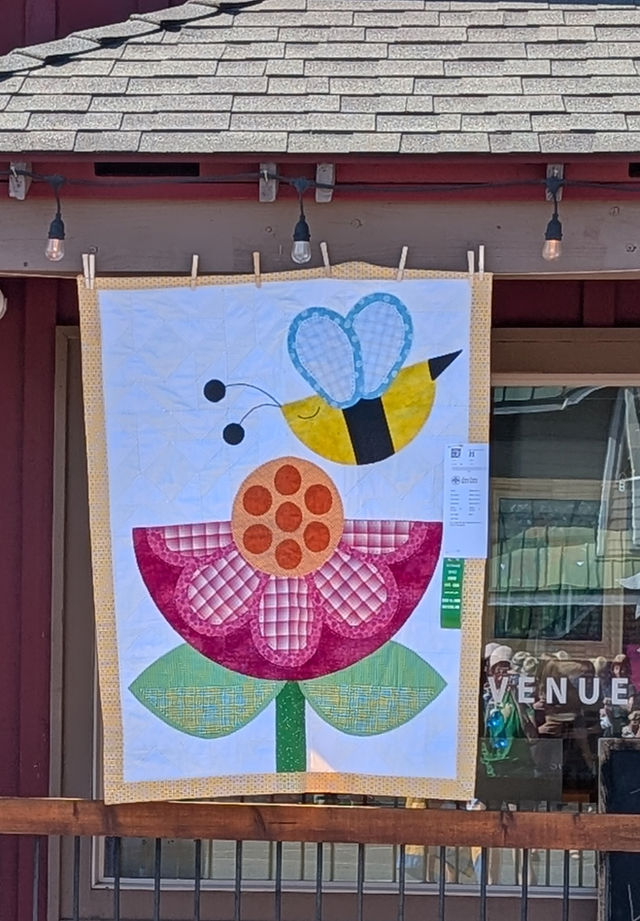


The Sisters Outdoor Quilt Show is one of my favorite summer traditions in Central Oregon. Every July, the entire town transforms into an open‑air gallery, with quilts hanging from storefronts, balconies, fences, and every spare wall. Even with the heat and the crowds, it’s still one of the most visually striking events of the season and this year gave us a mix of familiar charm and new discoveries.
A Little History
The show began in 1975 when Jean Wells, owner of Stitchin’ Post, hung a few quilts outside her shop. What started as a small local display has grown into the largest outdoor quilt show in the world, drawing thousands of visitors and hundreds of artists. Every quilt is hung for just one day, which gives the event a special, fleeting feel — you see it once, and then it’s gone.
What We Saw This Year
Walking through Sisters felt like stepping into a fabric museum. There were traditional patterns, modern geometric designs, landscape quilts, experimental pieces, and quilts that looked like paintings from a distance.
One of the standout sections featured incredibly realistic portrait quilts. These pieces used fabric shading, tiny stitched details, and layered textures to create faces that looked almost photographic. Up close, you could see how artists used fabric like paint building depth through color, thread, and careful placement.
Kid Experience
Even though the quilt show didn’t offer as many kid‑focused stations as last year, my kid still found a great hands‑on opportunity thanks to a booth run by Fashion Workshop, a Bend‑based organization that teaches sewing and design to kids, and teens. They weren’t officially part of the quilt show programming just a community group showing up with real tools, real fabric, and a welcoming setup. It ended up being one of the highlights of our day.
My kid got to experiment with real fabric, draping it on a mini dress form and learning how folds, gathers, and angles change the shape. They also practiced guiding fabric under a machine, learning how seams hold things together and how slowing down makes stitches cleaner. It wasn’t a full quilt project, but a little pouch that kids can use to hold coins, and little trinkets. This experience also gave kids the confidence to try something new and the people running it were wonderful.
As we walked through the town, observations were made from the quilts that were on display.
How portrait quilts use shading to create realistic faces
How geometric quilts rely on precise angles
How color choices change the mood of a piece
How stitching adds texture you can only see up close
It reminded me that kids don’t need a full activity zone to learn, sometimes one good booth and a lot of close looking is enough.
Kid‑Friendly Quilt Basics
If you’re bringing kids next year or want to introduce quilting at home here are a few simple concepts that help them understand what they’re seeing.
Blocks: Quilts are often made from repeating squares called blocks. Kids can spot patterns by looking for shapes that repeat.
Color Value: Light, medium, and dark fabrics help create depth. Portrait quilts use this heavily.
Stitching: The stitches on top aren’t just decoration; they add texture and hold the layers together.
Appliqué: Fabric shapes sewn on top of a quilt. Great for kids who like cutting and arranging pieces.
Fabric Grain: Fabric stretches differently depending on direction. Kids notice this quickly when draping.
Kid's Simple “Mini Quilt Block” Project
Here's a kid friendly quilt project that is simple, visual, and helps kids understand how quilts are built from repeating shapes.
Materials
4 small squares of fabric (4–5 inches each)
Needle and thread or a sewing machine
Pins or clips
Iron (optional but helpful)
Steps
Lay out the four squares in a pattern: checkerboard, diagonal, or any design your kid likes.
Sew the top two squares together along one edge.
Sew the bottom two squares together.
Sew the top row to the bottom row to create a 4‑patch block.
Press the seams flat if you have an iron.
Display it, frame it, or save it as the first block in a future quilt.
What Kids Notice
How small pieces become one larger piece
How seams create structure
How color placement changes the pattern
How pressing seams makes the block look crisp
How quilts are built from repeating units
STEM in Quilting
Wondering how STEM ties into quilting? It’s woven right into the process. Measurements teach precision and scale, geometry appears in every block pattern, and symmetry shows up in how pieces fit together. Quilters use spatial reasoning, pattern recognition, and basic engineering when planning layouts and joining fabrics. It’s hands‑on math and design, creative problem‑solving stitched into every seam.
Tips for Future Visitors
Go Early: Before 9 AM is ideal, quilts are already hung, the streets are quiet, and the temperature is still comfortable.
Bring Water: It gets hot fast, and shade is limited.
Wear a Hat: You’ll be outside for hours.
Start at the Edges of Town: Fewer crowds and great quilts.
Check Special Exhibits First: Portrait quilts, themed collections, and visiting artist displays fill up quickly.
Bring Kids Early: Hands‑on stations are easier to access before the crowds arrive.
Take Photos of Quilt Labels: Helpful for remembering artists and patterns later.
Closing
Even with fewer kid‑specific activities this year, the Sisters Outdoor Quilt Show delivered its usual mix of color, creativity, and community. The realistic portrait quilts were a highlight, and watching my kid experiment with sewing and draping added a personal touch to the day. It’s an event that rewards close looking — and going early — and it remains one of the most unique summer traditions in Central Oregon.
Pictures from July 2026


Comments